When a Story Reaches the Last Page
As an animal communicator, many of my sessions take place near the end of an animal’s life. In those sessions, I used to ask a question that felt natural and expected.
I asked if they were ready.
After many sessions, I realized that question did not reflect how animals experience the end of life. I no longer ask animals if they are ready.
It once seemed like the question that fit an end of life session. But after losing my 16 year old toy poodle, Ollie, and then guiding Sally through her final moments only a few months later, I came to understand that animals do not experience the end the way we believe they do. They do not debate the moment. They do not wonder if the timing is right. They simply understand when their story is reaching its last page.
Two very different dogs, passing within months of each other, taught me exactly that.
The Lesson Ollie Gave Me
During Ollie’s last day, he kept showing me the same images again and again. The end of a movie film reel slipping loose. The final page of a book being closed. Not dramatic or symbolic in a forced way. More factual. More matter of fact.
He was not asking to leave.
He was not confused or afraid.
He was not looking for permission.
He was showing me that his story was finished.
There was nothing left to add. No more scenes. No more pages. No more chapters. Just completion. Quiet, simple, and final.
That moment changed my work entirely.
I realized that asking an animal if they are ready places a human question on an experience animals do not process the same way we do. They do not evaluate their readiness. They do not analyze what it means to stay or go. They simply recognize when the story they have lived is complete.
So I stopped asking the question.
Instead, I shifted to what they actually can express:
What feels uncomfortable
What brings comfort
What matters to them in the moment
What they still want
What they want their people to understand
What remains unfinished, if anything does
Those questions honor the animal’s reality without placing responsibility on them.
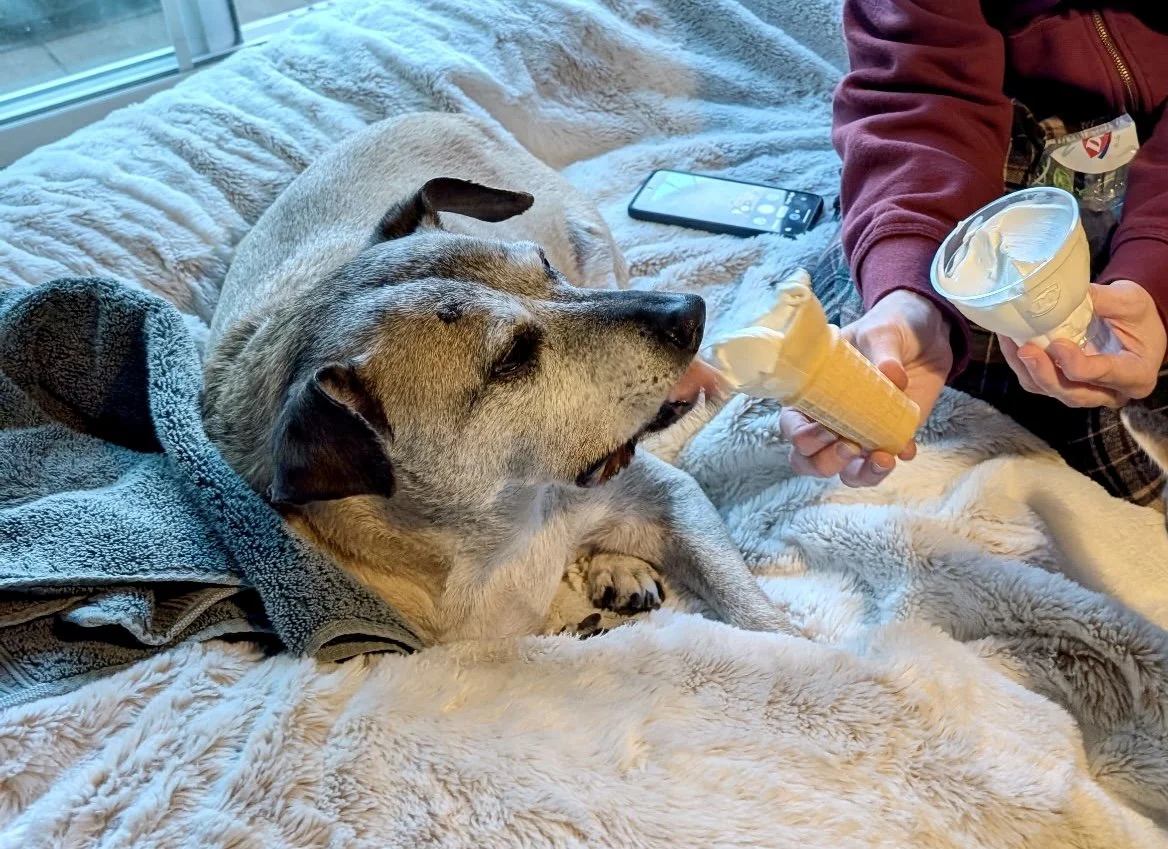
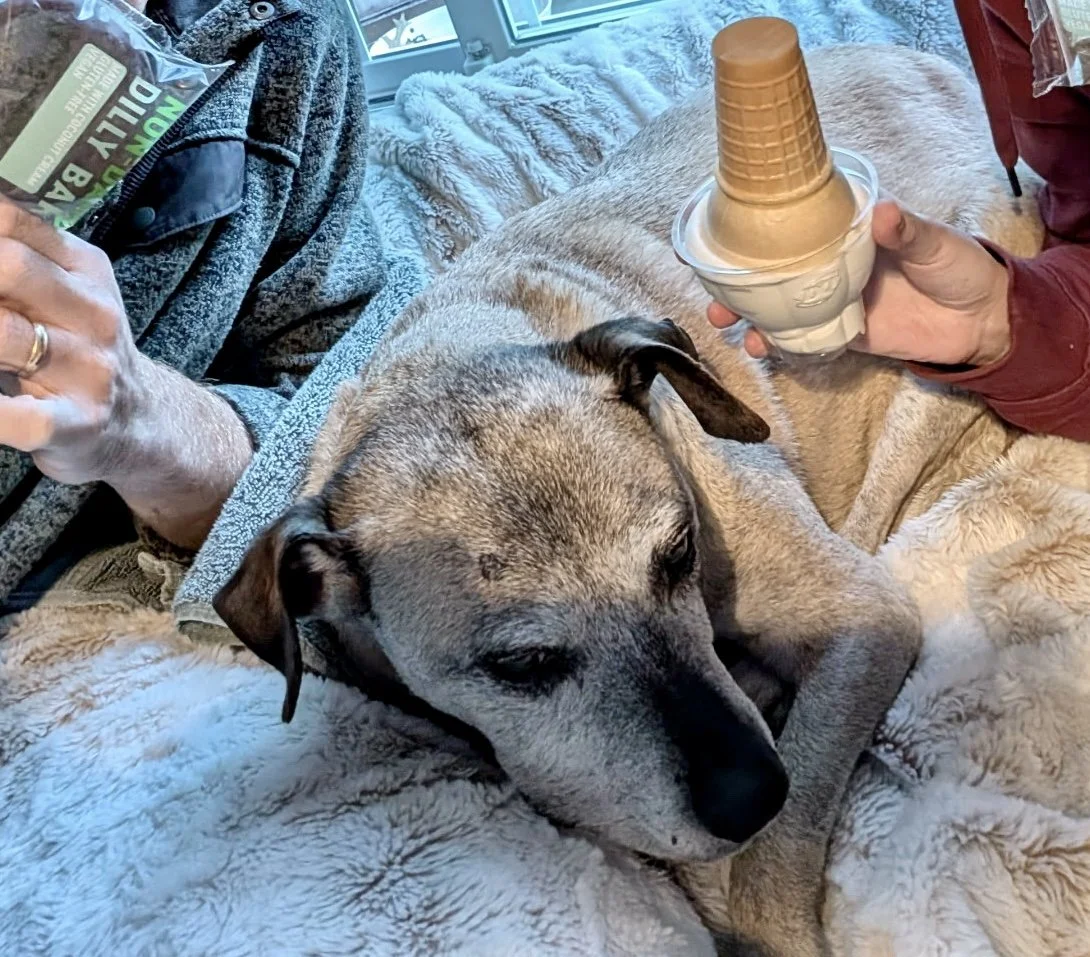
Sally: Sometimes you just need icecream & a cone.
Just a few months later, I had an end of life session with Sally. And because of Ollie, I entered it differently. I no longer framed the session around readiness. Instead, I listened for what was left in her story.
From the moment I connected with her, Sally felt foggy. Not confused in temperament. More like a dog who was drifting in and out, her energy soft and detached. I did not know her medical condition beforehand, but I could feel something affecting her clarity.
Later, her parents confirmed she had cancer and that it had likely spread. Everything about her energy made sense then.
Because of that fog, Sally did not come through with a lot of detail. She was tired. She was physically uncomfortable. Her mind felt like it was slipping away from the present moment. Animals often communicate this way near the end, especially when illness interferes with their usual awareness.
And in that fog, one clear desire rose above everything else.
Soft serve ice cream. With a cone.
Simple. Specific. Hers.
Nothing symbolic. Nothing complicated. Just the one thing her body and senses still connected to fully.
Her parents could have dismissed it as unimportant or trivial. Instead, they honored it. They picked up soft serve that evening and sent me a picture of Sally enjoying it. The picture made me smile because even in her fog, she still knew what mattered to her. And they listened.
She passed the next day, lying in a warm sunny spot inside the house. The kind of place a dog chooses from instinct and comfort.
Her mom later told me that they felt a surprising amount of peace with her passing because they knew she got to finish her story. Even if her mind was cloudy and her body was tired, she still had one last moment that belonged entirely to her.
What Ollie and Sally Taught Me
Ollie taught me that animals do not communicate readiness. They communicate completion.
Sally taught me that even when an animal is foggy or slipping away, the core of who they are still rises to the surface.
Ollie showed me the end of a story with clarity.
Sally showed me the end of a story through one sensory wish that still reached her.
Both reminded me that end of life communication is not about helping an animal choose a moment. It is about understanding what remains and what matters.
Animals do not fear the last page.
They simply want the last page to feel like theirs.
And our responsibility, the privilege of loving them, is to honor that in whatever form it appears.